
ExclusiveOpal.com
Exquisite Australian Opal
Get access to the best Opal in the USA by Appointment only
What makes opal unique
No Two Opals Are the Same
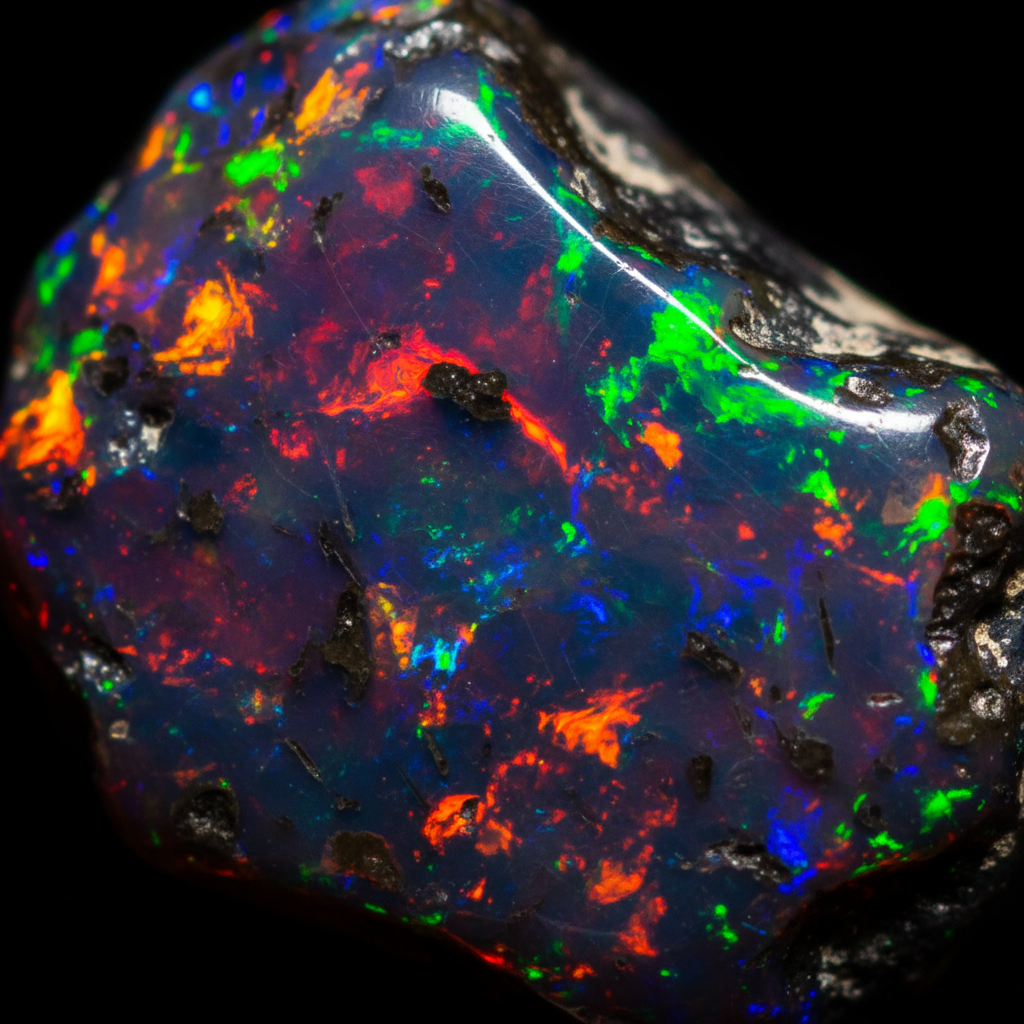
Opal's legendary play-of-color arises from a microscopic lattice of silica spheres, each stone arranged differently, each refracting light into a signature pattern that has never existed before and will never exist again.
Unlike faceted gemstones that reflect light from flat surfaces, opal diffracts light through its internal structure, producing shifting spectral colors that change with every angle of view.
Formed over millions of years as silica-rich water percolated through ancient rock, opal is a geological miracle, a gemstone that holds the colors of the universe within a single stone.
Opal varieties

The science of fire
Light Imprisoned in Stone
At the heart of every opal lies a three-dimensional grid of silica spheres, each between 150 and 300 nanometers in diameter. When these spheres are uniform in size and arranged in a regular pattern, they act as a diffraction grating — splitting white light into its component wavelengths.
The color produced depends on the diameter of the spheres: smaller spheres produce violet and blue, larger spheres produce red and orange. This is why the most valuable opals display red fire — it requires the largest, most precisely arranged silica spheres.
Scanning electron microscope image of opal's silica sphere lattice — the architecture of fire
95%
of the world's opals come from Australia
Millions
of years required to form a single opal
Unique
No two opals in existence are identical
Get in touch
Connect With Us
Whether you're a seasoned collector, a curious enthusiast, or simply captivated by the beauty of opals — we'd love to hear from you.